What does the National Curriculum require for primary languages? How should children progress from Year 3 to Year 6? And how can schools deliver engaging, effective language lessons?
Since September 2014, learning a foreign language has been compulsory at Key Stage 2 in maintained primary schools in England.
But delivering a successful primary languages curriculum involves much more than introducing children to French or Spanish vocabulary.
A good curriculum should help children develop their speaking, listening, reading and writing skills progressively, building the knowledge and confidence they need for secondary school.
Here's what primary schools need to know.
What are the National Curriculum requirements for primary languages?
The Department for Education's Key Stage 2 languages programme of study requires maintained schools to teach a foreign language throughout Key Stage 2. Academies have greater flexibility over their curriculum, but many follow the same programme of study. Schools can choose to teach a modern or ancient foreign language, although the programme of study places particular emphasis on practical communication in modern languages.
By the end of Year 6, children should have been taught to:
- Listen attentively to spoken language and respond appropriately.
- Explore pronunciation through songs, rhymes and familiar language.
- Ask and answer questions and engage in simple conversations.
- Speak in sentences using familiar vocabulary and phrases.
- Read and understand words, phrases and simple written texts.
- Write phrases and sentences from memory.
- Understand basic grammar and how sentences are constructed.
- Appreciate stories, songs, poems and rhymes in another language.
Importantly, the National Curriculum sets out expectations for the whole of Key Stage 2, rather than prescribing exactly what must be taught in each individual year. This gives schools flexibility to develop a curriculum that works for their pupils.
What should children learn in Years 3, 4, 5 and 6?
One of the biggest challenges for primary schools is ensuring that language learning progresses from year to year. Children shouldn't simply learn colours in Year 3, animals in Year 4 and food in Year 5 without opportunities to revisit and build on what they've already learned. A carefully sequenced curriculum introduces new knowledge while regularly reinforcing previous learning.
Here's an example of what progression might look like:
Year 3: Building the foundations
Children begin developing their confidence with unfamiliar sounds and words. They might learn to greet someone, introduce themselves, recognise familiar vocabulary and respond to simple questions. Songs, games, stories and repetition help children become comfortable listening to and speaking another language.
Year 4: Developing communication
Children build on their existing vocabulary and begin combining words into phrases and sentences. They might describe themselves, express preferences or ask and answer questions about familiar topics. Reading and writing become increasingly important alongside speaking and listening.
Year 5: Using language more independently
Pupils begin applying familiar vocabulary and grammatical structures in different contexts. They might describe people and places, express opinions, read short texts or write simple descriptions. Regular opportunities to retrieve previously learned language help strengthen their understanding.
Year 6: Preparing for secondary school
By Year 6, children should be developing greater independence and confidence. They might participate in longer conversations, understand short passages and produce increasingly detailed written work. The aim is to establish secure foundations and a positive attitude towards continued language learning.
These examples illustrate possible progression rather than statutory year-by-year requirements.
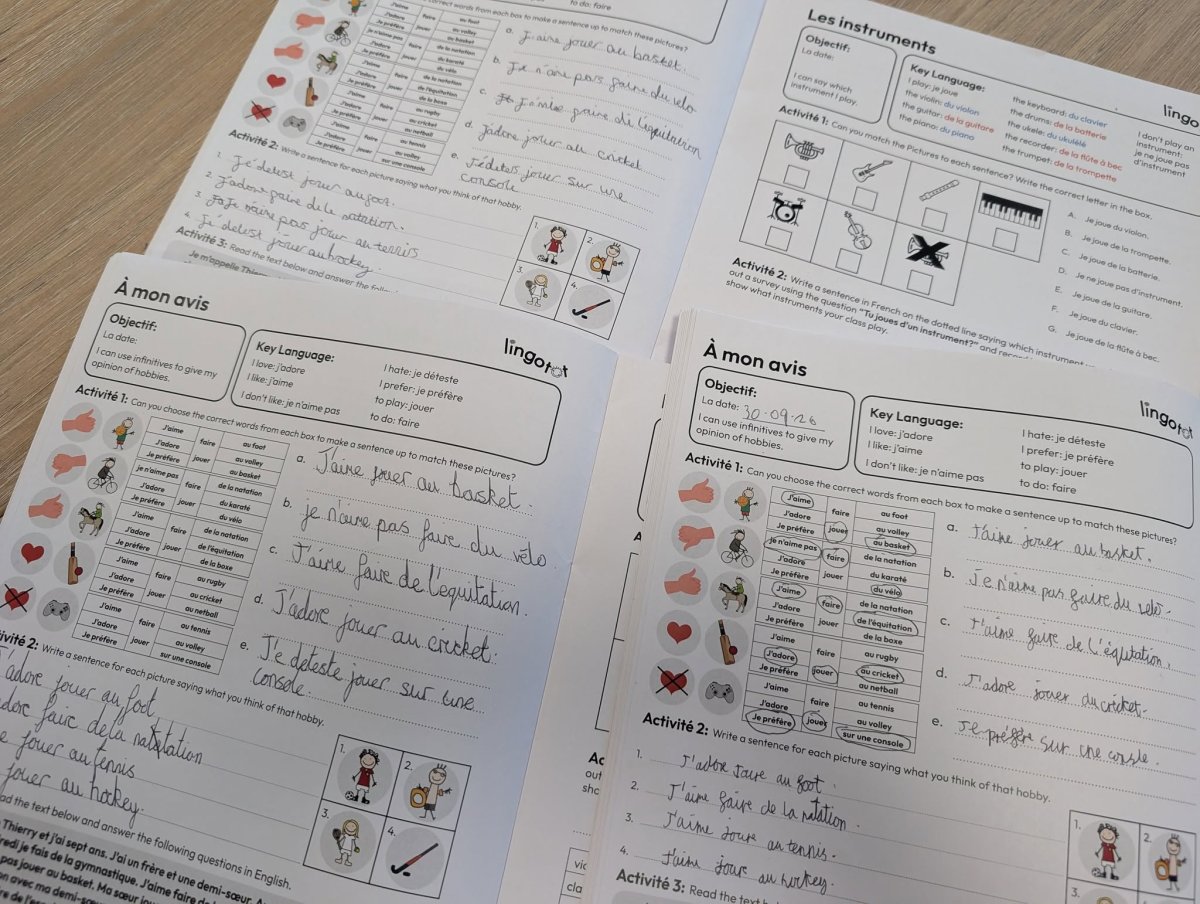
Lingotot pupils develop their French writing skills by constructing sentences, expressing opinions and applying their vocabulary.
The three building blocks of effective language teaching
Ofsted's research review of languages education identifies three important elements of language learning:
Phonics: Understanding how letters and combinations of letters relate to sounds in the language being learned.
Vocabulary: Building knowledge of words and phrases that children can remember and use.
Grammar: Understanding how words change and combine to communicate meaning.
These elements work together.
For example, when children learn to describe themselves, they can practise pronunciation, recall familiar vocabulary and develop their understanding of grammatical structures. The key is ensuring that activities are enjoyable while also building knowledge progressively.
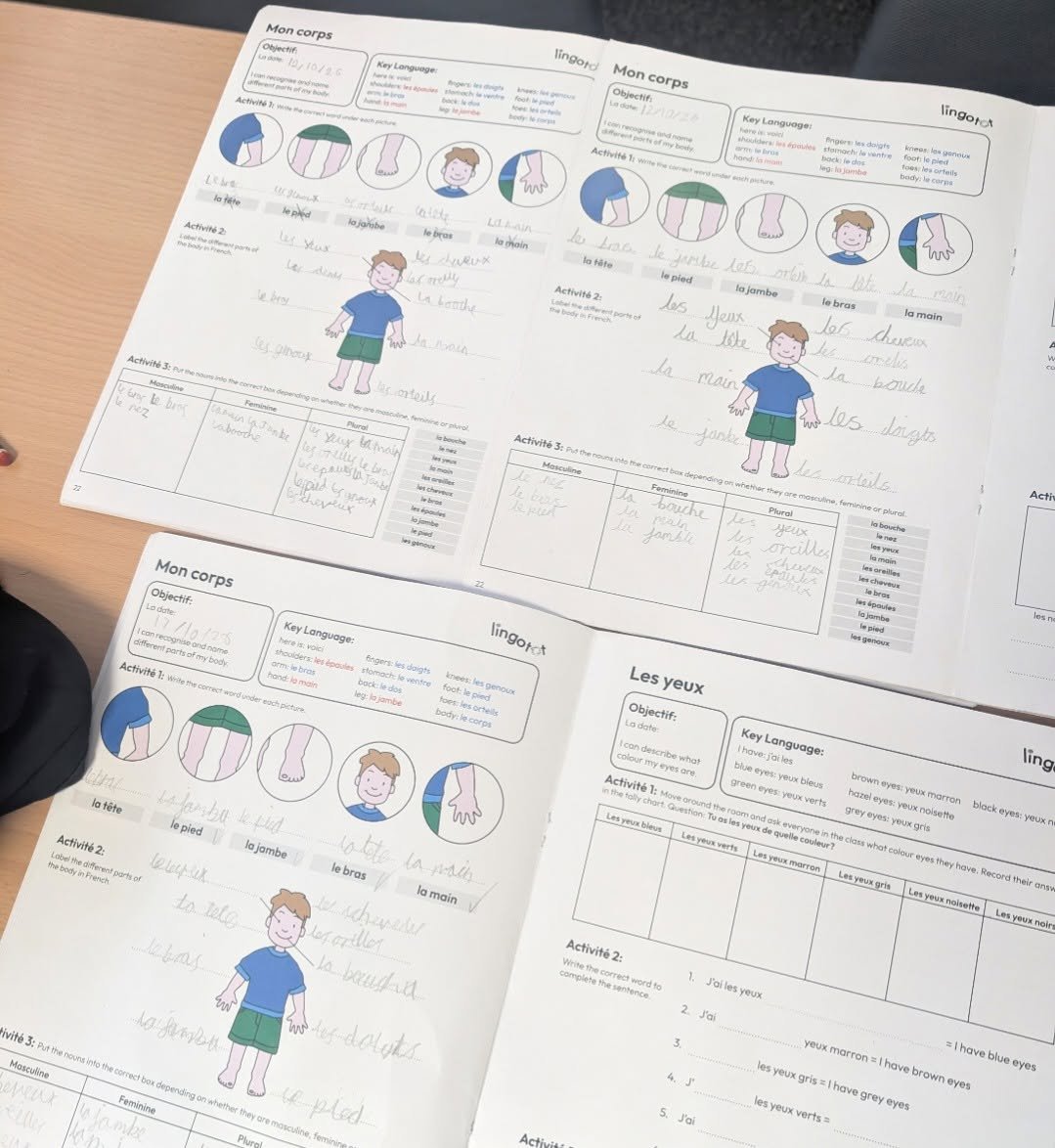
Lingotot's French activities help children develop vocabulary and grammatical understanding, including masculine, feminine and plural nouns.
How should primary schools assess language learning?
Assessment is important, but it doesn't have to involve lengthy written tests. Teachers can assess children's progress through everyday classroom activities, including conversations, listening tasks, games, reading exercises and short pieces of writing.
Useful questions include:
- Can pupils remember and use language taught previously?
- Are they becoming more confident speaking and listening?
- Can they recognise familiar vocabulary in written texts?
- Can they construct sentences using the grammar they've learned?
- Are they developing greater independence?
At Lingotot, assessment and progression are important parts of our approach. Our NCFE-accredited Certificate in Primary Languages provides an opportunity for children to have their achievements recognised at the end of Key Stage 2. The course includes assessment across speaking, listening, reading and writing, helping children demonstrate the language skills they've developed.
How can schools deliver an effective primary languages curriculum?
Schools take different approaches to delivering language lessons. Some use their own classroom teachers, while others work with specialist language providers. Whichever approach a school chooses, consistency and progression are essential.
Teachers need access to appropriate planning, resources and subject knowledge, and children need regular opportunities to practise what they've learned. Specialist provision can be particularly helpful where schools have limited language expertise or need additional teaching capacity.
Lingotot works with primary schools to deliver engaging, curriculum-aligned language lessons through specialist teaching and MFL PPA cover. Our lessons combine songs, stories, games, conversation and carefully planned activities, helping children develop their language skills in a supportive, enjoyable environment.
Discover how Lingotot makes primary language learning fun, interactive and engaging. Our curriculum-aligned lessons help children develop their speaking, listening, reading and writing skills through songs, stories, games and conversation. Find out more at www.lingotot.com/classes/school.
Giving children the best possible start in languages
In June 2019, I had the pleasure of visiting Bernadette Holmes at her home to discuss primary language education and the Lingotot approach. We spent a fascinating afternoon talking about language learning, curriculum development and our qualifications for young learners. It was wonderful to share ideas with someone who has played such an important role in primary languages education in England. That conversation reinforced something I've always believed: primary language learning should be much more than a weekly lesson. It should give children the knowledge, enthusiasm and confidence to continue learning languages throughout their education. And when we get it right, we can open up a whole world of opportunities!
Looking for support with your primary languages curriculum?
Whether your school needs specialist curriculum teaching, PPA cover or engaging extracurricular language activities, we'd love to help. Discover how Lingotot works with primary schools.